Concept Art Portfolio

Vis Dev Portfolio Guide

Building a Visual Development Portfolio

What is a Visual Development Artist?

Visual development artists in animation are versatile generalists who create a wide range of work to help establish the visual design of an animated film. Typically working on feature-length films, vis dev artists handle everything from rough concept sketches of the world, to color keys that establish each scene's mood, to final production-level paintings used directly in the film. Because of this range, it's critical for vis dev artists to have strong, well-rounded design skills and a solid aptitude for drawing and painting. Unlike TV animation where artists are often more compartmentalized, feature film artists are asked to deliver a much broader range of work. This type of portfolio is ideal for showcasing well-rounded skills, compatibility with animation style, and strong storytelling ability.
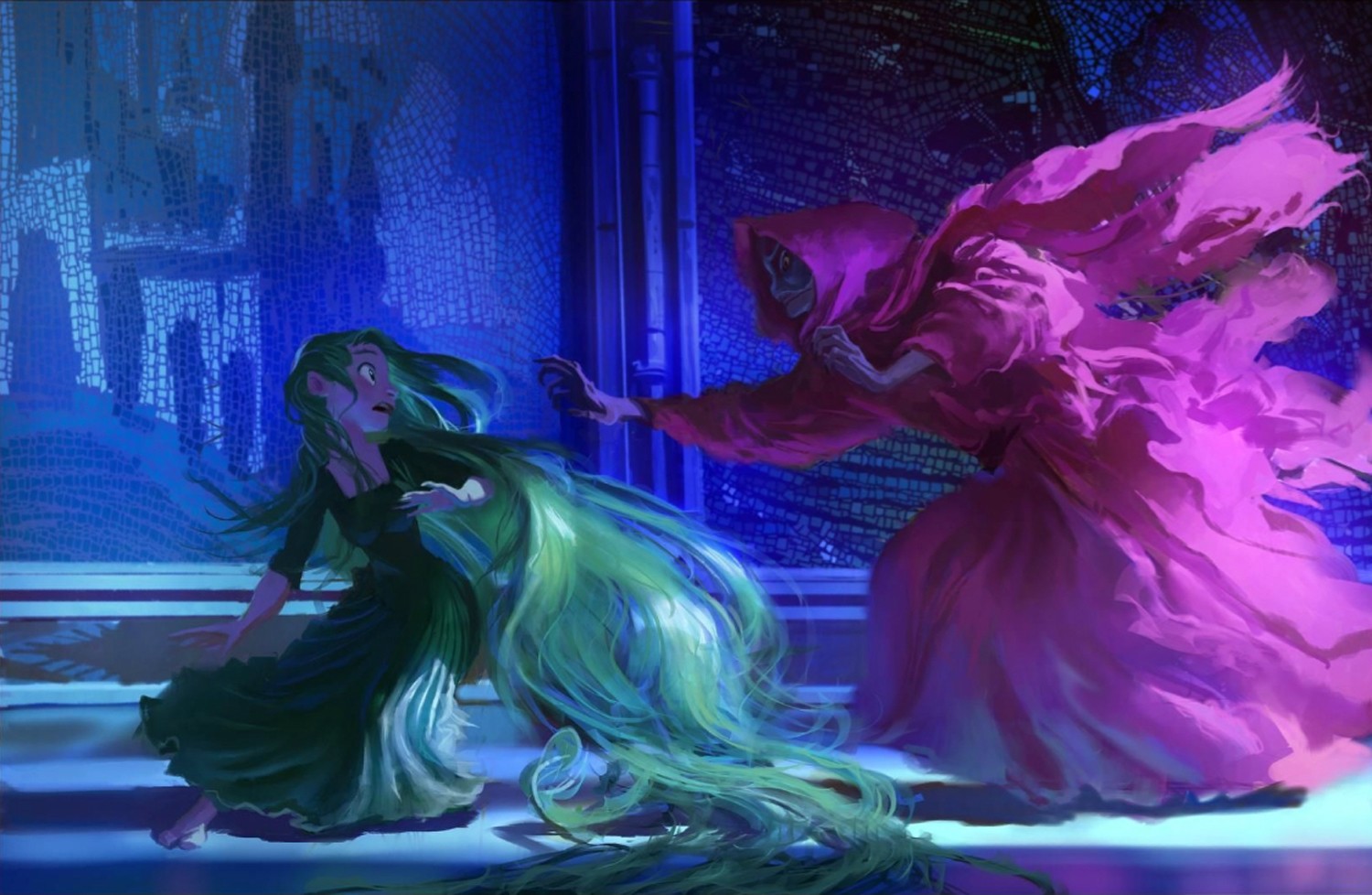
paul felix rapunzel
paul felix rapunzel

Paul Felix from Tangled

Character Design: Creating believable characters and/or creatures.

Environment Design: Establishing locations that support gameplay and tell stories.

Prop Design: Designing functional weapons, tools, objects and vehicles.

World Building: Ensuring all visual elements work together cohesively.

What's in a Vis Dev Artist Portfolio?

The core of every animated film is a strong story supported by rich world building. Animation studios need vis dev artists to explore, design, and build believable worlds where the story can take place. By presenting a thoughtful portfolio showcasing a believable world, you can communicate your ability to tell a story through your designs. As a vis dev artist, your responsibility is to effectively tell a narrative through every decision you make in your work.

Vis-Dev Artist Responsibilities:

Character Design: Creating believable characters and/or creatures.
Color & Lighting Design: Establishing mood and storytelling through color and lighting.
Prop Design: Designing props that fill out the world like food, equipment, weapons, and vehicles.
World Building: Build a believable world that supports the narrative.

Character Design: Creating believable characters and/or creatures.

Environment Design: Establishing locations that support gameplay and tell stories.

Prop Design: Designing functional weapons, tools, objects and vehicles.

World Building: Ensuring all visual elements work together cohesively.

Essential Skills For This Role:

Drawing & Sketching
Anatomy
Perspective & Composition
Color Theory
Design Principles

Drawing & Sketching
Anatomy
Perspective & Composition
Color Theory
Design Principles

Drawing & Sketching
Anatomy
Perspective & Composition
Color Theory
Design Principles

Story Boarding
Painting
Mood Boarding
Rapid Iteration

Story Boarding
Painting
Mood Boarding
Rapid Iteration

Story Boarding
Painting
Mood Boarding
Rapid Iteration

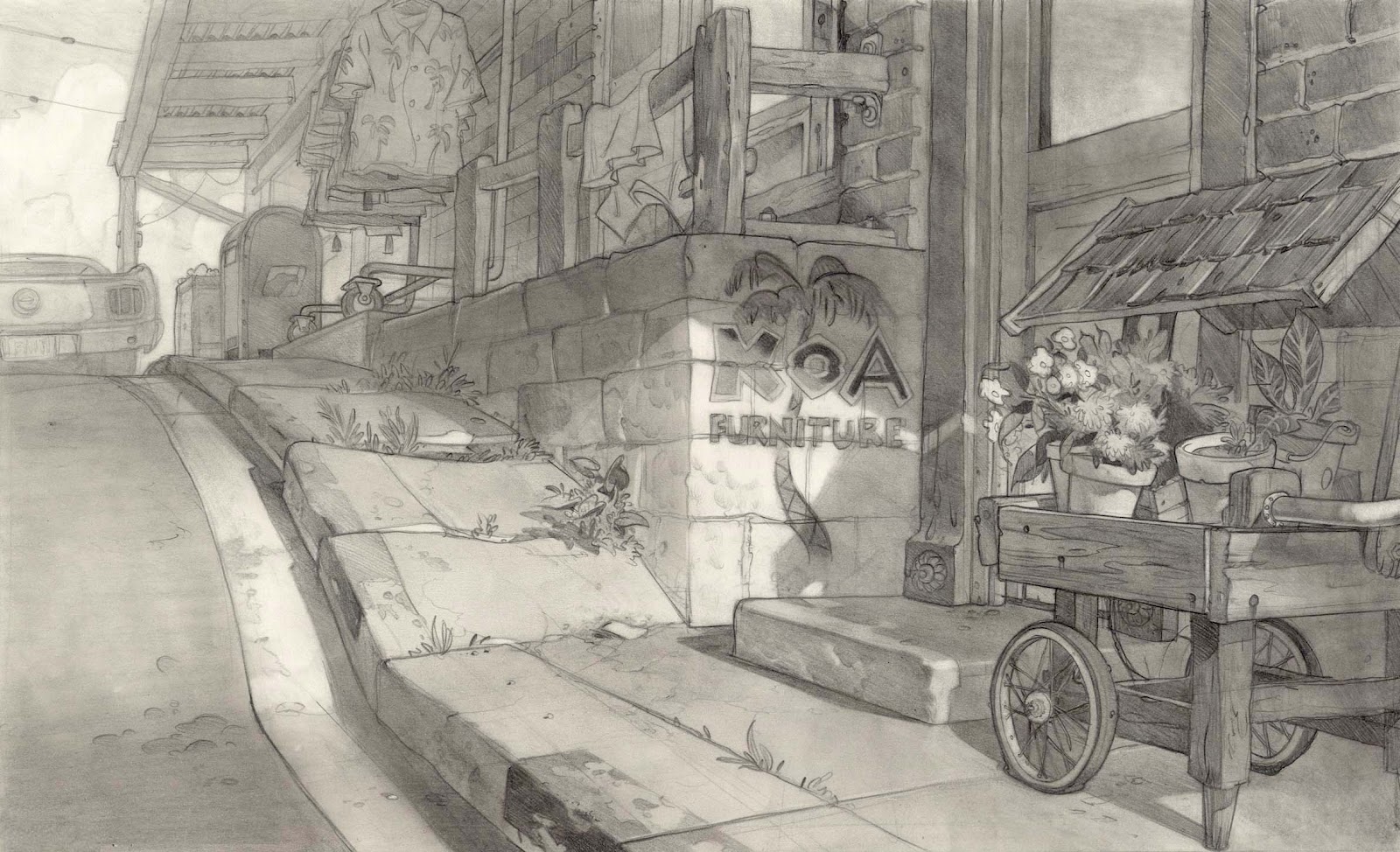
paul felix lilo and stitch

Paul Felix from Lilo & Stitch

Character Design: Creating believable characters and/or creatures.

Environment Design: Establishing locations that support gameplay and tell stories.

Prop Design: Designing functional weapons, tools, objects and vehicles.

World Building: Ensuring all visual elements work together cohesively.

Structuring Your Portfolio

For your portfolio, aim to have at least 2 Projects with 8-10 Pages of work that revolve around a narrative.

The most effective portfolios are often built around narratives rather than random standalone pieces. A narrative better reflects critical thinking and world building, and influences every decision made in the design and game play.

These projects should show your design process and ability to maintain visual consistency across multiple pieces. While it's valuable to include some standalone pieces that showcase different skills, your narrative projects should form the core of your portfolio.

For your portfolio, aim to have at least 2 Projects with 8-10 Pages of work that revolve around a narrative.

The most effective portfolios are often built around narratives rather than random standalone pieces. A narrative better reflects critical thinking and world building, and influences every decision made in the design and game play.

These projects should show your design process and ability to maintain visual consistency across multiple pieces. While it's valuable to include some standalone pieces that showcase different skills, your narrative projects should form the core of your portfolio.

Narrative Provides:

Narrative Provides:

Design Logic: A framework for making consistent visual choices.

Storytelling Through Visuals: Proves you can communicate stories through your artwork.

Problem-Solving Context: Shows how you approach design challenges within animation.

Professional Relevance: Simulates a real visual development pipeline.

Design Process Documentation: Shows your iteration methods, from initial concepts through refined final designs.

2 Ways to Choose a Story

You can build your narrative projects by either adapting existing stories with your own visual interpretations or developing original stories from scratch. Adaptations let you focus on visual development while originals can give you more control over the work you create. Note that creating an original story will require more time and work as you are also taking on the role of a writer. Both approaches are effective at demonstrating your concept design abilities.

Below is a break down of pros & cons for these two approaches:

Option 1
Re-Imagine An Existing Narrative

Adapt classic literature, mythology, or old films.

Add unique twists (e.g., What if Jack and the Beanstalk was set in the Qing Dynasty?)


Avoid recent popular games or movies narratives (reduces direct comparison)


Pros & Cons

Viewers are already familiar with the subject so it's easier to understand at a glance.


Less upfront work so you can focus on the art.


May have less originality.

Option 2
Create An Original Narrative

Write down your story (or at least the big story beats) before doing the artwork so you have a solid roadmap to follow.


Pros & Cons

Gives you complete creative control.


Shows original thinking and world-building skills.


Shows you have design and narrative skills.


Requires story development time which may take away focus from your art.


May be harder to understand for new viewers

Building A Portfolio Project

Below is a guide for structuring a full vis dev project in your portfolio. It's highly recommended you have at least the pages below but you may add and/or subtract pages to fit your goals and project.

Use this guide as a starting framework, but let your career goals and project scope guide the final direction.

Your portfolio directly influences the type of work opportunities you'll receive, so ensure it aligns with where you want to work and what you want to create!
Begin by answering these questions…

Project Narrative

What's the narrative? (Choose an existing story or write your own)

Film Concept
  • What is the scope of this film? (Short film or feature film)

  • What genre? (Fantasy, Sci-fi, Horror, etc.)

  • What is the style & the final animation medium? (2D, 3D, stop motion, etc.)

Visual Style

What is the style you want to work with? Be specific, find examples. (Laika stop motion style, painterly style like Arcane, etc.)

Project Example

Below is a recommended template for each page of this portfolio with visual examples from existing films.


This is a jumping off point! Use this guide as a rough template but feel free to adjust it to fit your own project.

Page 1

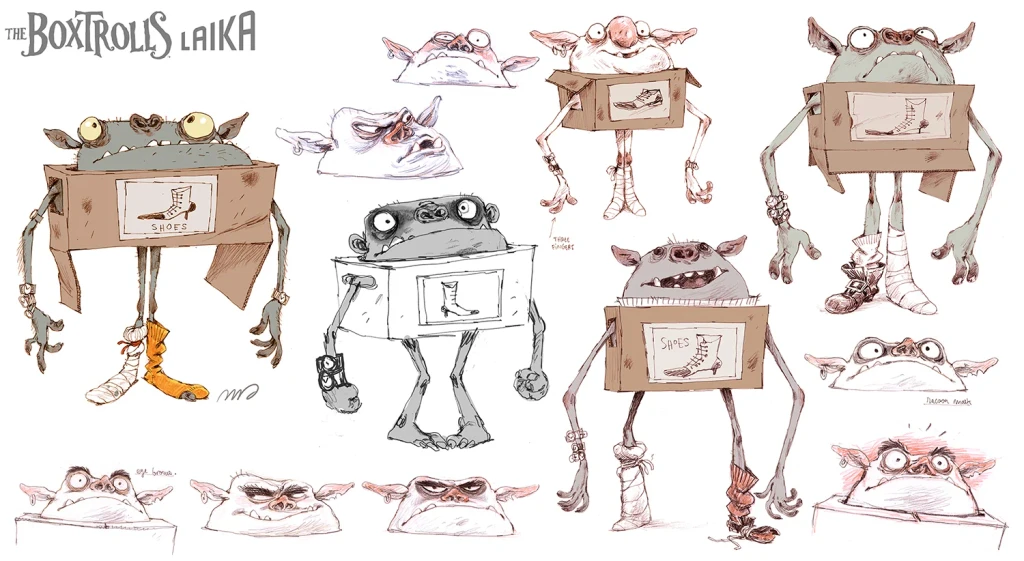
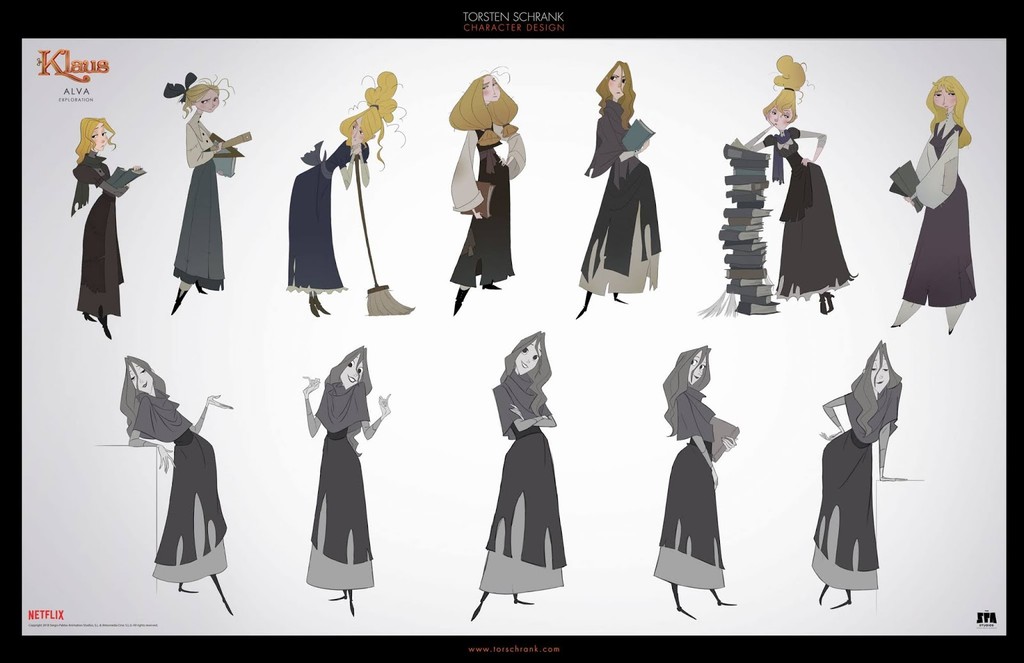
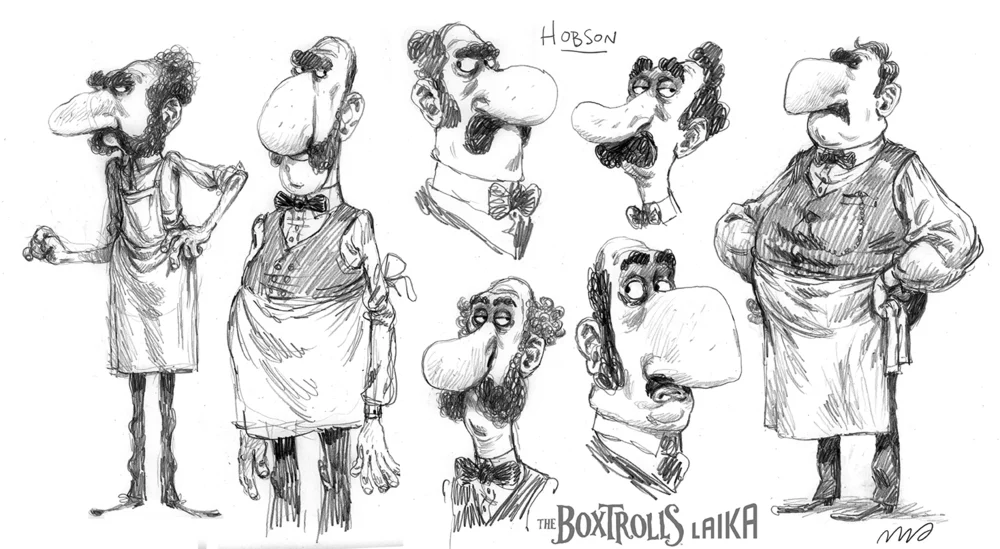
Introduce Your Characters

Focus: Characters Designs Driven By Narrative

Include:
- Focus on liveliness, gesture, expression, and appeal
- Fashion/clothing that reflects the world and character's personality
- Clear silhouettes and strong appealing expressions
- Cohesive, striking stylization unique to the world
- Explore a range of variations in the design

Include:
- Focus on liveliness, gesture, expression, and appeal
- Fashion/clothing that reflects the world and character's personality
- Clear silhouettes and strong appealing expressions
- Cohesive, striking stylization unique to the world
- Explore a range of variations in the design

Tip: Create a page with both ideation sketches and more refined drawings to showcase your thought process

Tip: Create a page with both ideation sketches and more refined drawings to showcase your thought process

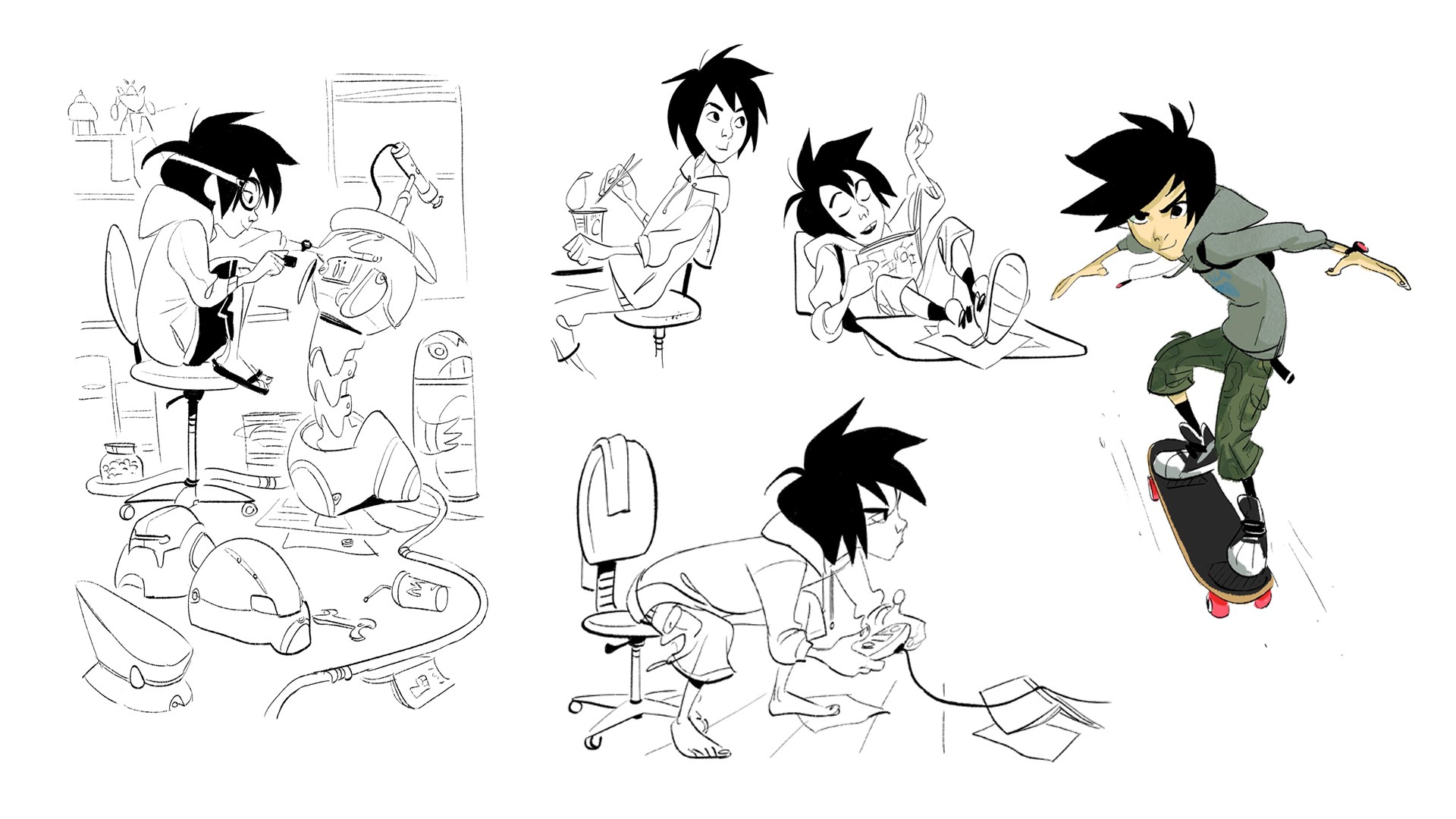
shiyoon kim hiro drawings
sylvain marc character design for boxtrolls

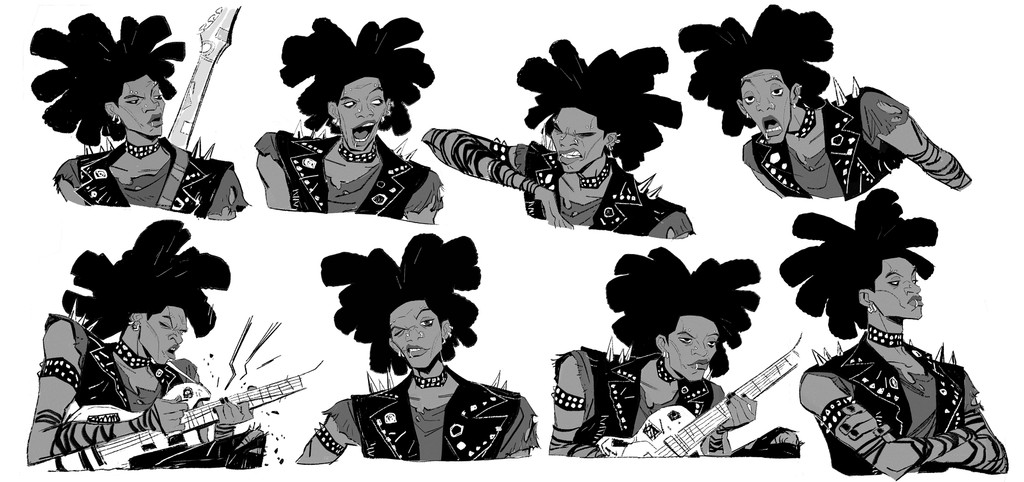
Examples: Torsten Schrank from Klaus (L), Sylvain Marc from Boxtrolls (R)

Page 2

Character Expressions

Focus: Expressive Characters in Motion

Include:
- A variety of facial expressions for the character
- Show the character in motion
- Describe their personality with their body language
- Show dynamics and relationships between multiple characters
- Callouts for specific motions or interactions in the story

Include:
- A variety of facial expressions for the character
- Show the character in motion
- Describe their personality with their body language
- Show dynamics and relationships between multiple characters
- Callouts for specific motions or interactions in the story

Tip: Make sure the characters are recognizable and on model even when drawn with different expressions.

shiyoon kim character designs


Examples: Ami Thompson from Spiderverse (L), Shiyoon Kim from Big Hero 6 (R)

Page 3

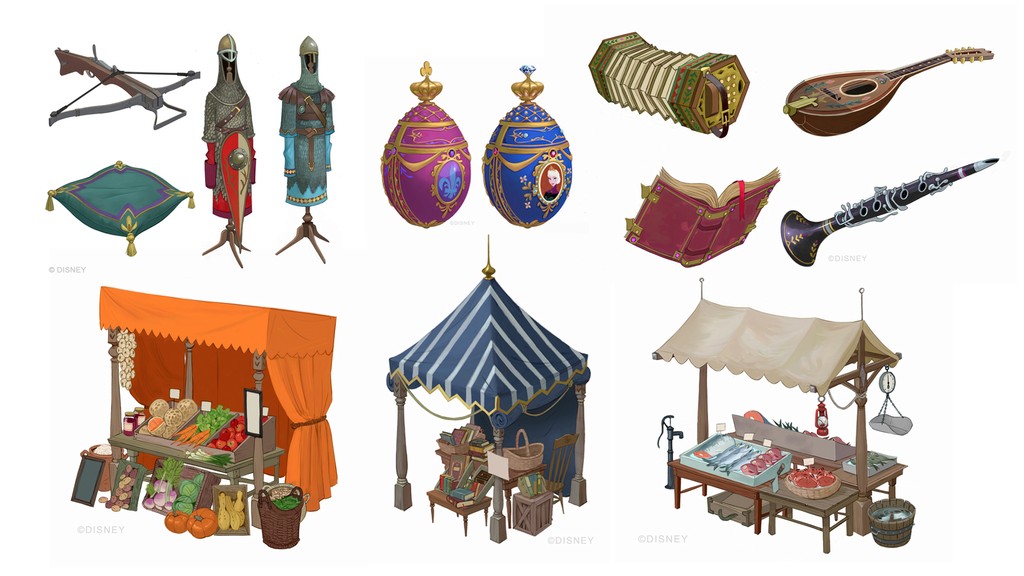
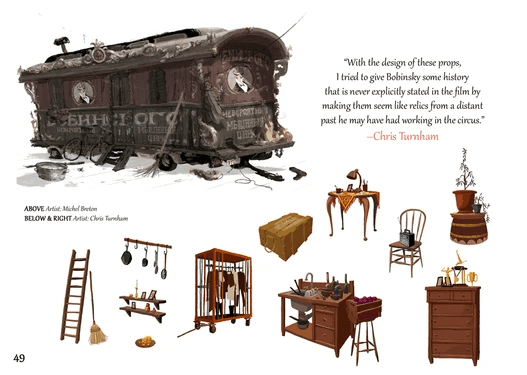
Props

Focus: Design Items Your Character Will Interact With
Focus: Your Primary Character's Weapons and/or Tools

Include:
- Multiple sketches of props or groups of props that fill out a space in your world
- The props should communicate the stylization of your world
- If characters use or interact with your prop, describe how it works
- Material breakdowns or exploded views with call outs

Include:
- Multiple sketches of props or groups of props that fill out a space in your world
- The props should communicate the stylization of your world
- If characters use or interact with your prop, describe how it works
- Material breakdowns or exploded views with call outs

Tip: Establish stylization rules for your world like no straight lines, exaggerated proportions, bottom/top heavy shapes, etc. and design your props based on these rules.

cory loftis prop design
chris turnham coraline prop art

Examples: Cory Loftis for Frozen (L), Chris Turnham from Coraline (R)

Page 4

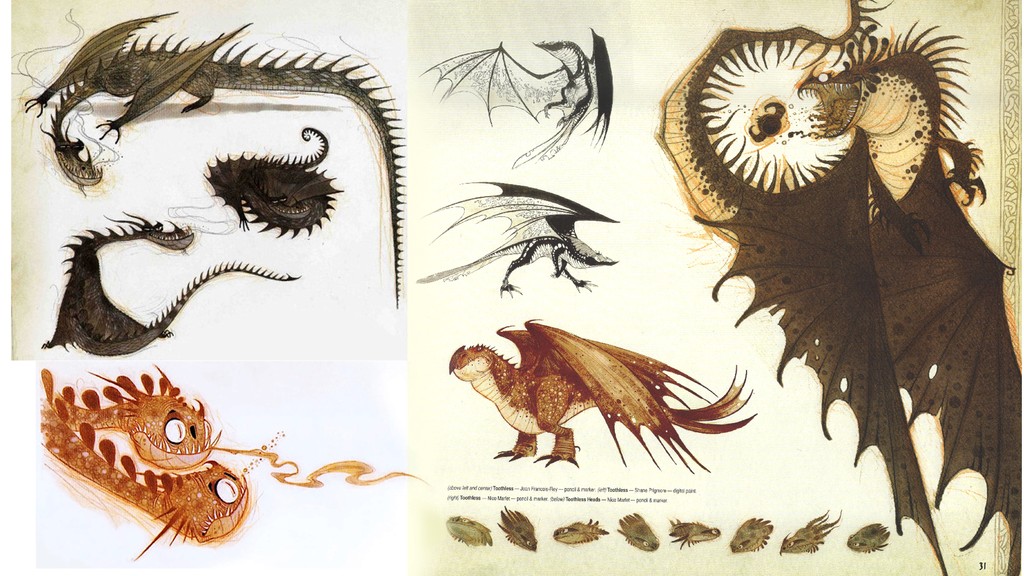
Creature Design

Focus: Friends or Foes of your World

Include:
- Multiple ideation sketches of creature designs
- Your design should communicate if they are a friend or foe
- Creature should exist within the style of your world
- How does your creature move or interact with the characters?
- Size comparisons with characters or environment

Include:
- Multiple ideation sketches of creature designs
- Your design should communicate if they are a friend or foe
- Creature should exist within the style of your world
- How does your creature move or interact with the characters?
- Size comparisons with characters or environment

Tip: Design by thinking about how this creature serves your narrative and how it will interact with the characters and the world around it.

nico marlet how to train your dragon

Examples: Sylvain Marc from Boxtrolls (L), Nico Marlet from How To Train Your Dragon (R)

Page 5

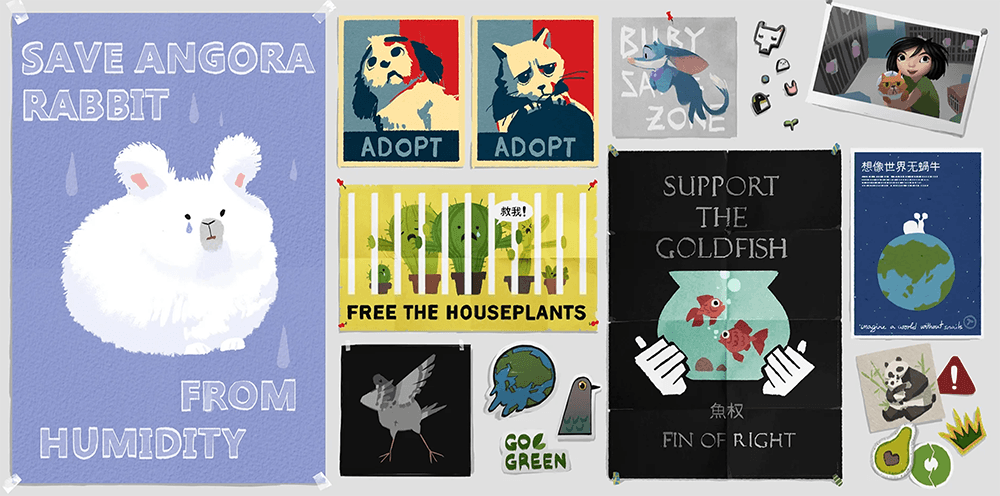
Graphics Design

Focus: Designs that may be used as textures to fill out the world.
Focus: How Your Characters Travel

Include:
- Poster or packaging designs for props or textures that will fill out your world.
- Parodies or funny knock-offs of real world brands or posters redesigned to your style.
- Consider where these graphics will appear and how they will create a believable world.
- These designs are often used directly as textures in the final film so make sure they fit into the final style.

Include:
- Poster or packaging designs for props or textures that will fill out your world.
- Parodies or funny knock-offs of real world brands or posters redesigned to your style.
- Consider where these graphics will appear and how they will create a believable world.
- These designs are often used directly as textures in the final film so make sure they fit into the final style.

Tip: You can reuse these designs in your environment and prop design paintings too.

celine kim abominable
tiffany-lam spiderverse

Examples: Celine Kim from Abominable (L), Tiffany Lam from Spiderverse (R)

Page 6

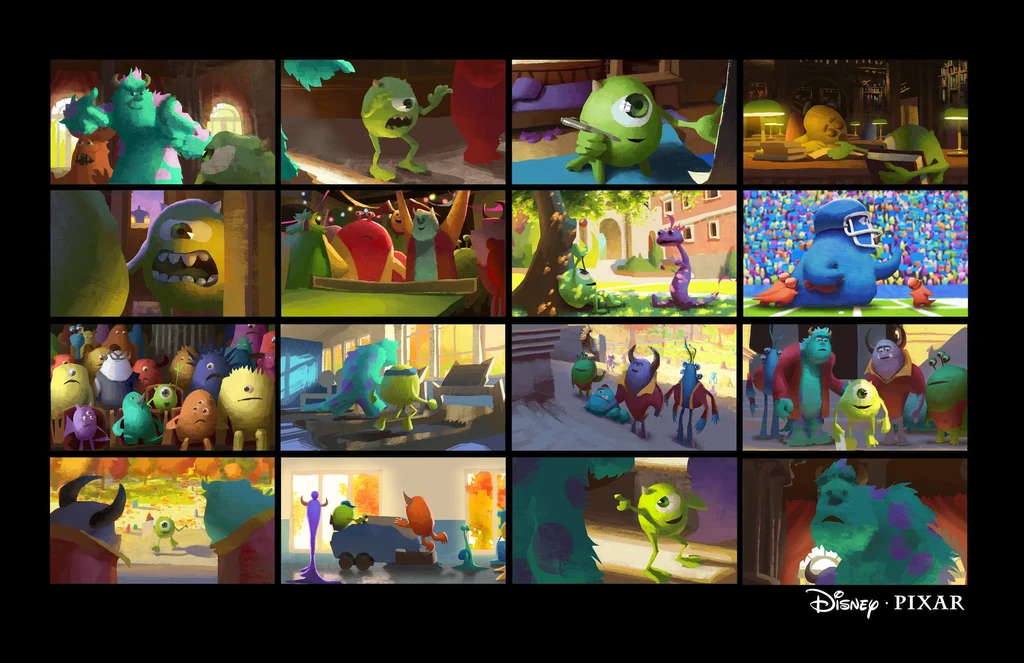
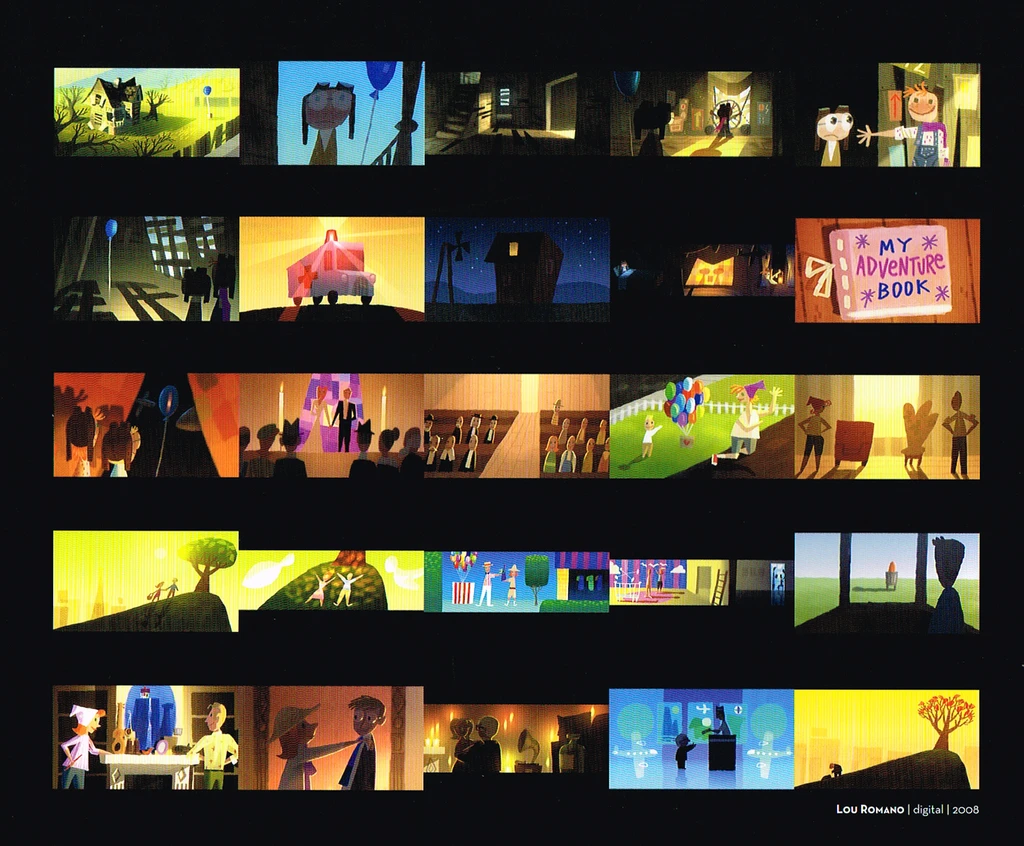
Color Keys

Focus: Tell your Story Beats with Color

Include:
- A series of colored story beats in a scene or across multiple scenes (or the entire story).
- Paintings can be on the rougher side but should still have clear composition and lighting.
- Showcase changes in the mood by using strategic color and lighting choices.
- Stylization should remain consistent

Include:
- A series of colored story beats in a scene or across multiple scenes (or the entire story).
- Paintings can be on the rougher side but should still have clear composition and lighting.
- Showcase changes in the mood by using strategic color and lighting choices.
- Stylization should remain consistent

Tip: Start by sketching out a rough storyboard of the most important parts of your story and then map out shifts in color for each beat to describe the mood of that scene.

shelly wan color keys

Examples: Shelly Wan from Monsters University (L), Lou Romano from Up (R)

Page 7

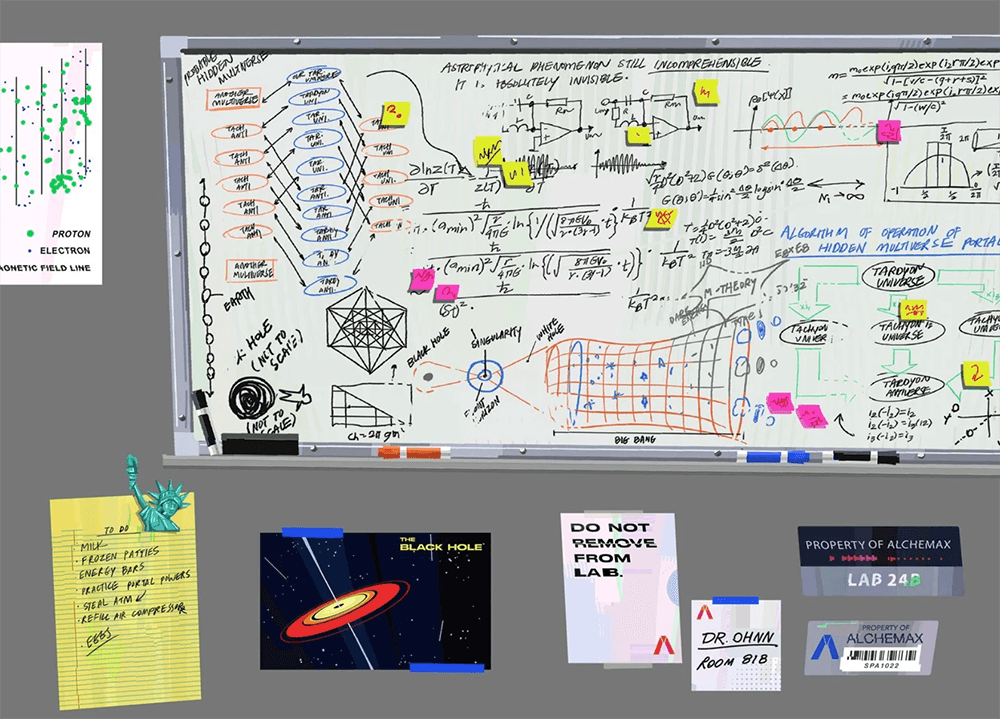
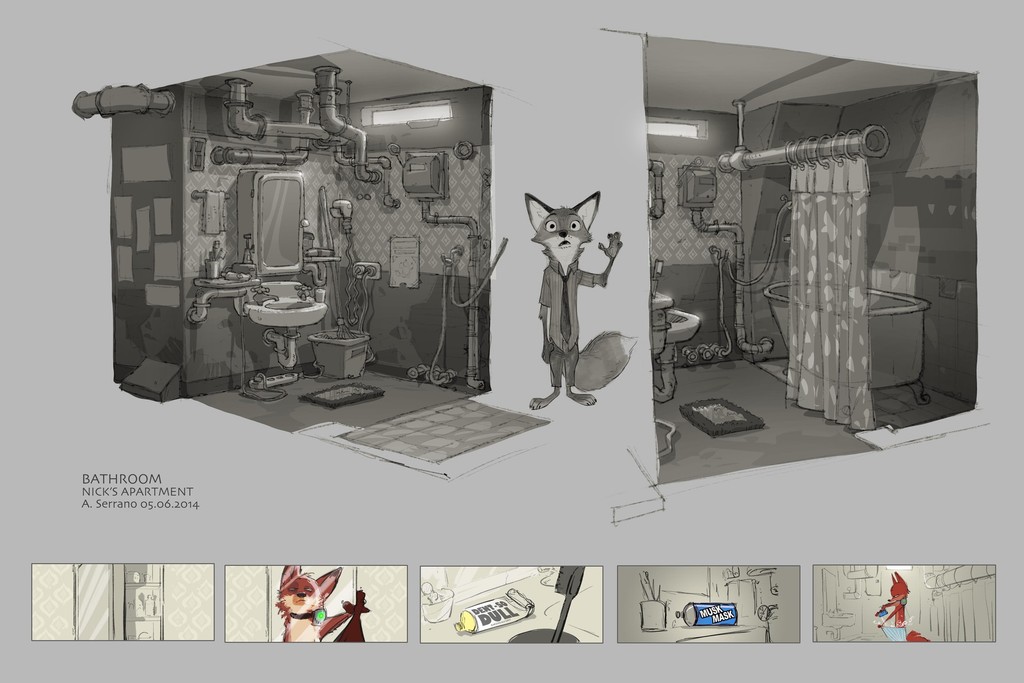
Environment/Set Design

Focus: Informational Drawings that Help Set the Scene

Include:
- Technical line drawings or cutaways showing detailed environments or architecture
- Clear and informative drawings that describe the space while establishing the world
- Sense of scale in comparison to characters
- Call outs for specific items or areas the character will be interacting with.

Include:
- Technical line drawings or cutaways showing detailed environments or architecture
- Clear and informative drawings that describe the space while establishing the world
- Sense of scale in comparison to characters
- Call outs for specific items or areas the character will be interacting with.

Tip: Always design with a character in the scene to make sure your scale is correct.

Celine Kim from the Sea Beast
armand serrano zootopia

Examples: Celine Kim from The Sea Beast (L), Armand Serrano from Zootopia (R)

Page 8

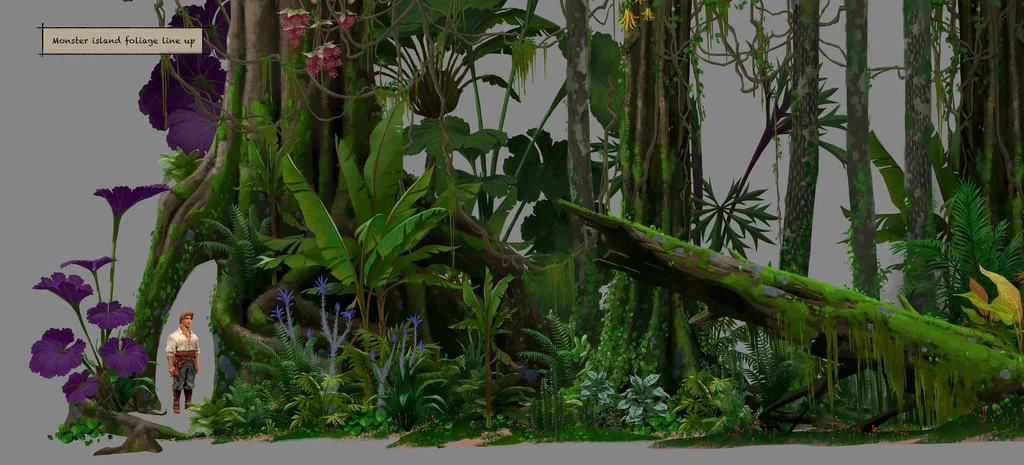
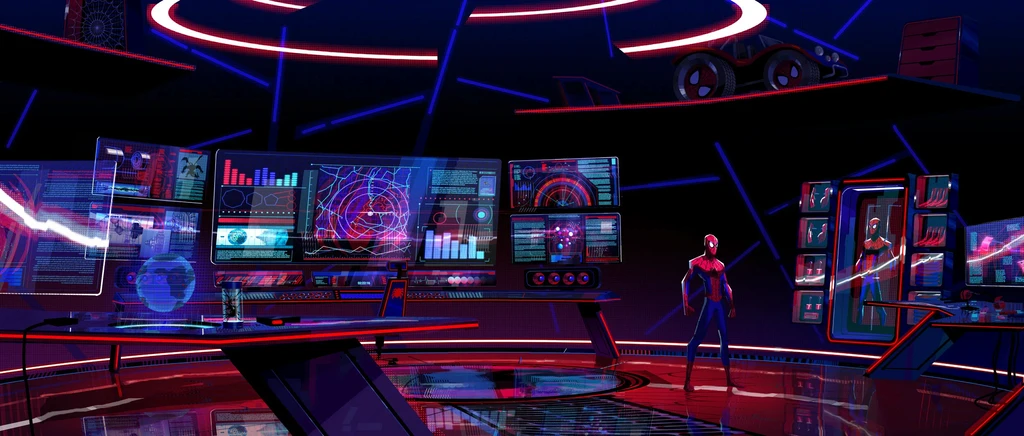
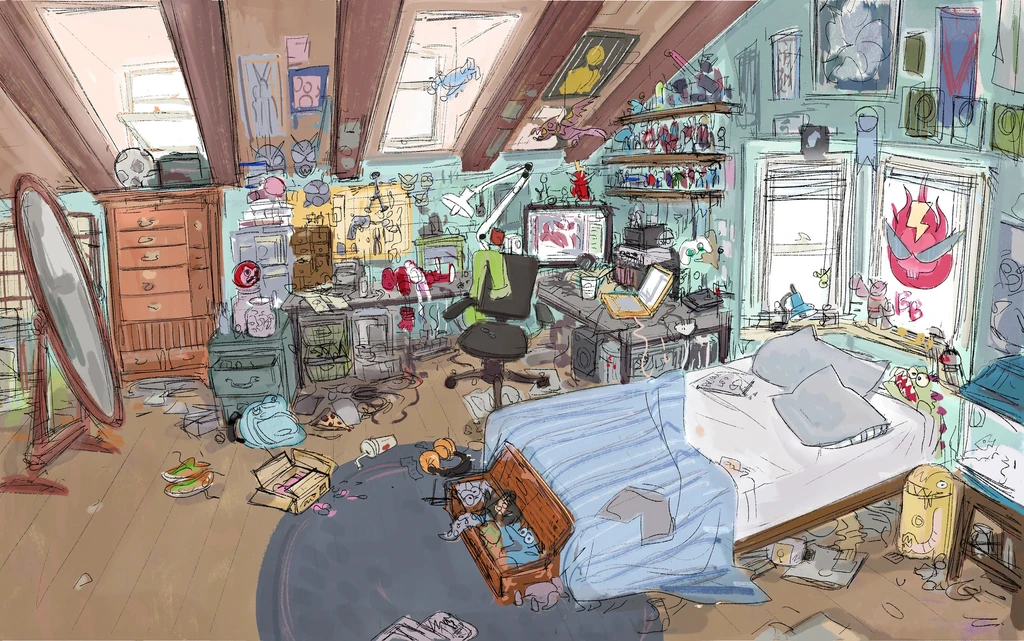
Environment Painting

Focus: Showcase the World

Include:
- A painting of a key environment in your story like a character's room, secret lair, HQ, etc.
- The environment should describe it's purpose in the story
- Show how your character would exist in the space and what they would interact with
- Include props and graphics you designed earlier to fill out the space
- Include the character in the scene to show a sense of scale.

Include:
- A painting of a key environment in your story like a character's room, secret lair, HQ, etc.
- The environment should describe it's purpose in the story
- Show how your character would exist in the space and what they would interact with
- Include props and graphics you designed earlier to fill out the space
- Include the character in the scene to show a sense of scale.

Tip: This painting can be more moody and less explanatory than the set design drawings but should still be very clear.

scott watanabe big hero 6

Examples: Yuhki Demers from Spiderverse (L), Scott Watanabe from Big Hero 6(R)

Page 9 (optional)

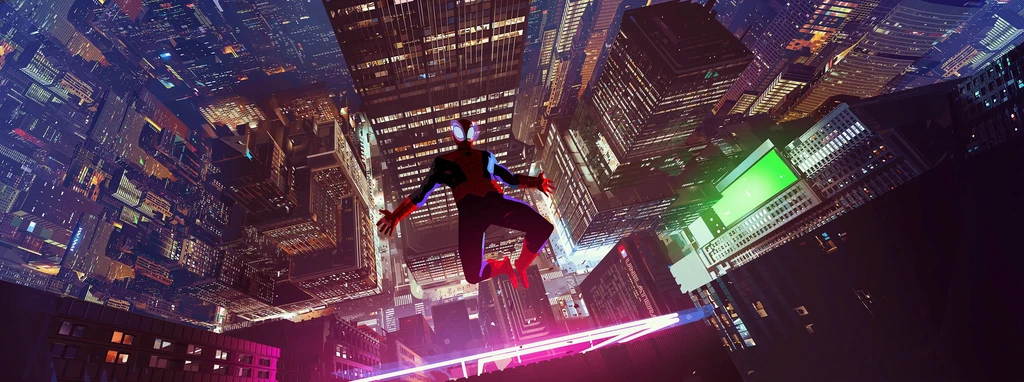
Keyframe Painting

Focus: The Hero Shot of Your Story

Include:
- One painting of a defining moment in your story.
- Your characters interacting or mid-action within an environment.
- A strong sense of mood told through color and lighting.
- Cinematic framing and a dynamic composition.

Include:
- One painting of a defining moment in your story.
- Your characters interacting or mid-action within an environment.
- A strong sense of mood told through color and lighting.
- Cinematic framing and a dynamic composition.

Tip: Imagine you are painting the most important scene in your film and try to sell your story through this painting.

alberto mielgo spiderverse
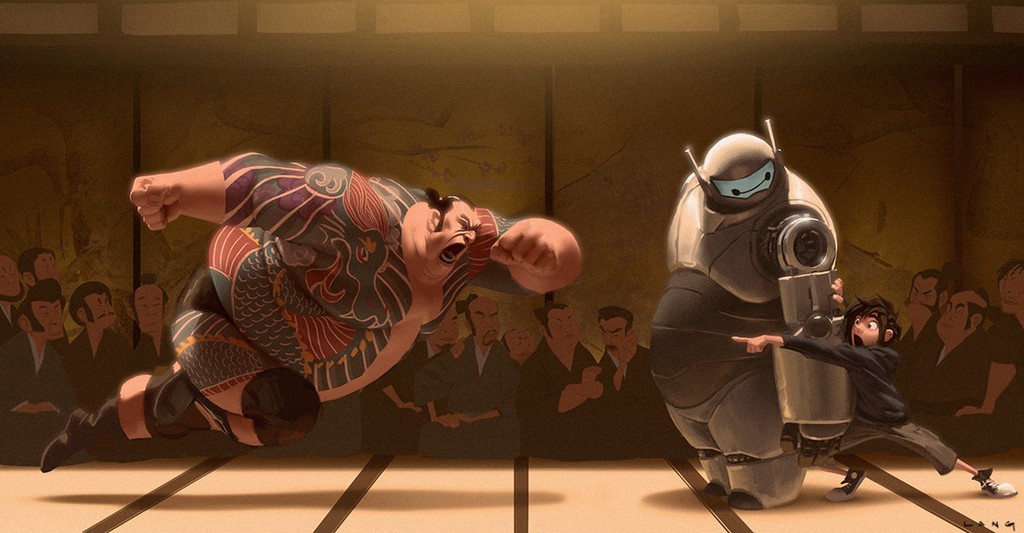
ryan lang form big hero 6

Examples: Alberto Mielgo from Spiderverse (L), Ryan Lang from Big Hero 6 (R)

Final Thoughts…

Final Thoughts…

Remember that building a strong portfolio starts with solid technical and design fundamentals. This simple portfolio structure should showcase your creativity and artistic skills to the fullest.

We hope this guide has provided a helpful framework for building your portfolio. Remember, this is a starting point, not a rulebook. Feel free to adapt this guide to fit your strengths and artistic vision. Choose what resonates with you, and make sure everything you include showcases who you are as an artist.

Vis Dev Portfolio Template

Sign up to HIDEOUT to access the full 9 Page template for PSD and ProCreate.

Download Now

Join HIDEOUT

HIDEOUT

$8/month

Full HIDEOUT Access

Access all premium content on HIDEOUT

New Content Added Regularly

We are routinely sharing new art knowledge so you can continue your learning

Join The Journey

Join our mission to create the definitive space where artists collaborate, learn, and build their careers together.

HIDEOUT

$8/month

Full HIDEOUT Access

Access all premium content on HIDEOUT

New Content Added Regularly

We are routinely sharing new art knowledge so you can continue your learning

Join The Journey

Join our mission to create the definitive space where artists collaborate, learn, and build their careers together.

Vis Dev Portfolio Template

Sign up to HIDEOUT to download the full portfolio page templates for PSD and Procreate.

HIDEOUT

$8/month

Full HIDEOUT Access

Access all premium content on HIDEOUT

New Content Added Regularly

We are routinely sharing new art knowledge so you can continue your learning

Join The Journey

Join our mission to create the definitive space where artists collaborate, learn, and build their careers together.

HIDEOUT

$8/month

Full HIDEOUT Access

Access all premium content on HIDEOUT

New Content Added Regularly

We are routinely sharing new art knowledge so you can continue your learning

Join The Journey

Join our mission to create the definitive space where artists collaborate, learn, and build their careers together.